Global sourcing is changing how buyers evaluate circuit protection. A Wifi Smart Mcb combines switching, overload protection, and remote monitoring in one compact device. It can help factories, distributors, and building operators inspect power status without visiting every panel. A phone alert at 2 a.m. may reveal an abnormal load before production stops.
The sourcing decision requires more than a low unit price. Experienced buyers should review rated current, breaking capacity, temperature performance, communication protocols, and installation requirements. Supplier audits can confirm production controls, test equipment, and traceability. Ask for clear datasheets, independent test reports, samples, and warranty terms. Local electrical standards must also be checked before approval. A qualified engineer should verify compatibility with the intended distribution board.
Connectivity brings practical value. Energy data can support maintenance planning and help identify unusual consumption patterns. Yet Wi-Fi depends on network quality, software support, and responsible data handling. A device may perform well in a showroom but behave differently in a crowded commercial building. That limitation deserves attention. No smart breaker removes the need for professional installation or routine inspection.
Reliable suppliers explain these boundaries instead of promising effortless automation. They provide firmware policies, replacement guidance, technical training, and responsive after-sales support. Buyers should compare total ownership cost, not only the purchase quote. A careful pilot order can expose pairing problems, delayed notifications, or unclear manuals. Those findings may feel inconvenient. They can prevent larger sourcing mistakes later. For global buyers, the strongest choice balances verified safety, useful intelligence, stable supply, and honest technical communication.
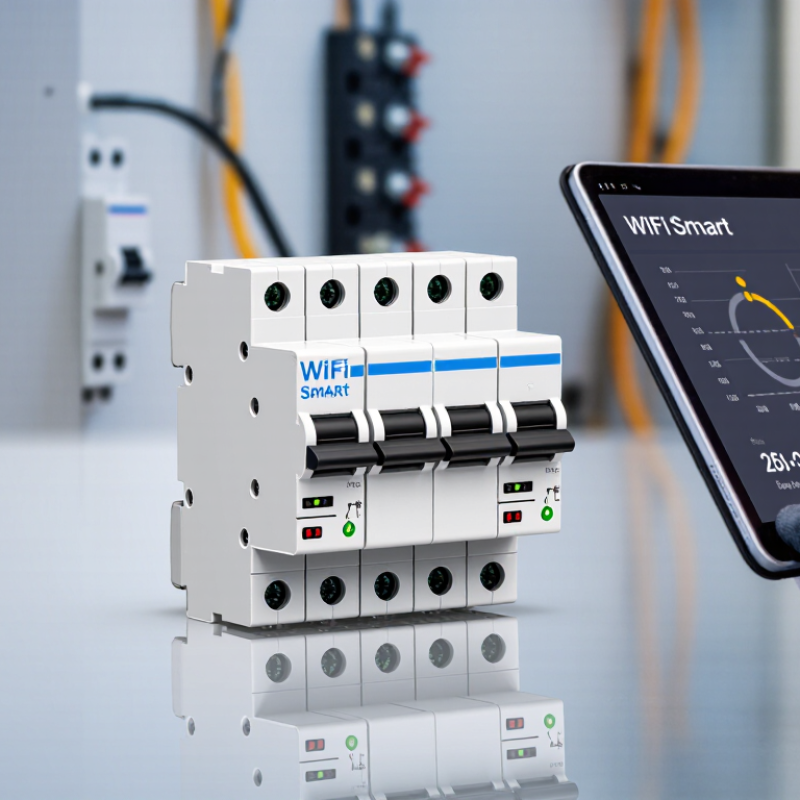
Define Wi-Fi Smart MCBs Under IEC 60898-1: Up to 440 V and 125 A
Why Choose Wi-Fi Smart MCB for Global Sourcing?
Under IEC 60898-1, a Wi-Fi smart MCB is built around a low-voltage circuit breaker for household and similar applications. The standard covers rated voltages up to 440 V AC and rated currents up to 125 A. These limits matter during global sourcing. A device marked “smart” still needs verified breaking capacity, temperature performance, insulation, and mechanical endurance.
IEC 60898-1 does not make Wi-Fi a safety function. Communication is an added layer. It may support remote status checks, overload alerts, energy monitoring, and scheduled switching. The protection mechanism must remain dependable when the network fails. That point is easy to miss. A disconnected router should not disable overcurrent protection.
The International Energy Agency’s Electricity 2024 report forecasts global electricity demand will grow by about 3.4% annually from 2024 to 2026. More connected loads will increase demand for clear circuit visibility. However, sourcing teams should compare rated current, pole configuration, frequency, short-circuit performance, and installation conditions. A 125 A label alone proves little.
Look for test reports from competent laboratories and traceable technical files. Confirm whether the product’s wireless functions were assessed separately from its protective functions. Local rules may also require additional approvals. The wording needs checking. Wi-Fi convenience can improve maintenance, but it cannot replace correct coordination, suitable wiring, or professional installation.
Specify Protection Ratings: 6–10 kA Breaking Capacity for Global Projects
Why Choose Wifi Smart MCB for Global Sourcing?
Specify Protection Ratings: 6–10 kA Breaking Capacity for Global Projects
Global electrical projects face rising load demand and uneven network conditions. The IEA Electricity 2024 report forecasts global electricity demand will grow by about 3.4% annually from 2024 to 2026. That growth increases pressure on distribution boards, especially in commercial buildings, factories, and remote facilities. A WiFi smart MCB adds remote status monitoring, but its communication function does not improve short-circuit protection. The breaking capacity still matters most.
For many international projects, 6 kA suits lower-fault residential or light commercial circuits. A 10 kA rating offers greater fault interruption margin near transformers or industrial feeders. IEC 60898-1 covers circuit-breakers for household and similar installations, while IEC 60947-2 applies to many industrial applications. Always verify the prospective short-circuit current at the installation point. A 10 kA device is not automatically safer if the system requires different coordination. This shortcut appears often. It needs review.
Tips:
Request test certificates, rated voltage, tripping curves, and temperature limits. Confirm whether the WiFi gateway works across the target country’s network conditions. Check local installation rules before ordering. Also compare 6 kA and 10 kA models against the measured fault level, not only purchase price. Reports from the International Electrotechnical Commission remain useful references, but project engineers must validate site data independently.
Evaluate Connectivity: 2.4 GHz Wi-Fi, App Control, and Cloud Access
Why Choose Wifi Smart MCB for Global Sourcing?
When sourcing a Wi-Fi smart MCB, connectivity deserves careful testing, not optimistic assumptions. A 2.4 GHz Wi-Fi connection usually offers better range through walls than higher-frequency networks. However, metal enclosures and concrete panels can weaken the signal sharply. Test the device inside a realistic distribution board, not only on a workbench.
App control should provide clear switching status, overload alerts, and useful event records. Cloud access adds value for remote monitoring across warehouses, offices, and rental properties. Still, cloud services depend on internet availability and data handling practices. Local manual operation must remain possible during network failure. I have seen impressive dashboards become less useful when notifications arrived several minutes late. That detail matters.
Tips: Confirm 2.4 GHz compatibility before ordering. Check whether the app supports multiple users and regions. Ask for documented encryption, update procedures, and server locations. Test reconnection after router restarts. Also compare actual standby power, response time, and temperature behavior under load. A small trial batch is wiser than a large commitment. Connectivity looks simple. It rarely is.
Verify Compliance: IEC 60898-1, CE Marking, and Local Grid Requirements
Why Choose Wi-Fi Smart MCB for Global Sourcing?
A connected miniature circuit breaker can provide remote switching, fault alerts, and circuit-level visibility. Yet compliance must come before dashboard features.
IEC 60898-1 covers household and similar AC circuit-breakers up to 440 V, 125 A, and 25 kA short-circuit capacity. Request the exact test report, not only a declaration. Check tripping curves, endurance, temperature rise, dielectric strength, and short-circuit results. The tested pole arrangement must match the offered model.
A Wi-Fi module may also trigger radio, EMC, and cybersecurity obligations in the destination market. CE marking is a manufacturer’s declaration of conformity, not an independent safety certificate. Under the EU framework, retain the EU Declaration of Conformity and technical file. Local rules still decide installation acceptance. Voltage, frequency, neutral switching, enclosure rating, and earthing can vary.
Tips:
Build a country matrix before sampling. Record the IEC edition, rated values, CE scope, local approvals, radio bands, and required documents. Compare the QR label with the certificate model number. Photograph terminal spacing and sealing. Small mismatches matter.
The IEA Electricity 2024 report expects global electricity demand growth to average about 4% through 2026, increasing interest in connected protection. That forecast does not prove product quality. It only explains market timing.
A sourcing review should also test offline behavior, firmware updates, data handling, and recovery after router loss. These checks are easy to overlook, even for experienced teams.
Build a Sourcing Scorecard Using 440 V, 125 A, and 25 kA Benchmarks
Why Choose Wifi Smart MCB for Global Sourcing?
Build a Sourcing Scorecard Using 440 V, 125 A, and 25 kA Benchmarks
Global electricity demand is expected to grow by an average 3.4% annually from 2024 to 2026, according to the IEA Electricity 2024 report. This growth increases pressure on distributors to source compact, remotely manageable protection devices. A WiFi smart MCB can support monitoring, switching, and alert functions, but connectivity should never replace electrical performance.
Build the scorecard around three hard benchmarks. Check a rated voltage of 440 V, a continuous current of 125 A, and a short-circuit breaking capacity of 25 kA. Ask suppliers to state whether these values apply together under the same test conditions. Confirm compliance with the relevant IEC requirements, such as IEC 60898-1 or IEC 60947-2. Review temperature derating, pole configuration, trip characteristics, insulation distance, and endurance tests. A datasheet alone is not enough. Independent laboratory reports and traceable test records offer stronger evidence. In practice, some suppliers describe peak capabilities too broadly. That deserves scrutiny.
Tips: Score electrical safety at 40%, test evidence at 25%, communication reliability at 15%, and lifecycle support at 20%. Test WiFi recovery after a power outage. Check whether manual operation remains available. Also inspect cybersecurity documentation, firmware update procedures, and data hosting terms. A weak signal can create delayed alerts. This small detail is easy to miss. Use sample units in a metal enclosure before approving volume orders. Real installations may expose assumptions that factory demonstrations hide.
Conclusion
Wifi Smart Mcb technology combines the core overcurrent protection of a miniature circuit breaker with remote monitoring and control capabilities. For global sourcing, buyers should first confirm that the product is designed within IEC 60898-1 requirements, with suitable ratings up to 440 V and 125 A. Breaking capacity is also critical: a 6–10 kA rating may suit many standard projects, while higher benchmarks, such as 25 kA, should be considered where system fault levels demand stronger protection.
Connectivity should be evaluated through practical features, including stable 2.4 GHz Wi-Fi, reliable app control, cloud access, status notifications, and secure user management. Sourcing teams should verify IEC 60898-1 conformity, CE marking where applicable, and compatibility with local grid rules and installation practices. A clear scorecard comparing voltage, current, breaking capacity, communication performance, compliance documents, and after-sales support can help buyers select a Wifi Smart Mcb that balances safety, connectivity, and long-term project value.
 Srochn
